
Insects
Insects are everywhere and the Countryside Park is no exception. The larger, more colourful flying insects are easy to spot but the smaller, well camouflaged insects that fly less often, or not at all can be very difficult to find. There are, however, more than 20,000 insect species in the UK. Butterflies, Dragonflies and Hover-flies have their own pages on this site so this page just has a selection of some of the other insects you are most likely to find around the park.
Bees and Wasps
Bumble-bee
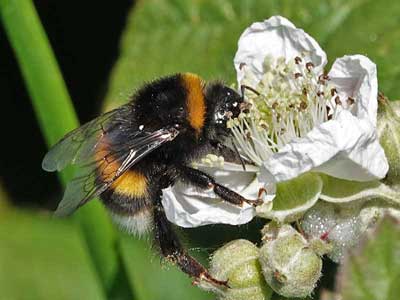
The Bumble-bee is a familiar visitor to our gardens but is in decline due to the loss of flower-rich meadows. Several species can be found within the park.
Honey Bee
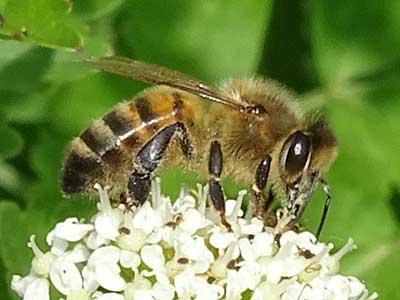
There are many species of bee in the park. The most familiar is the Honey Bee which sometimes nests in hollow trees.
Common Wasp
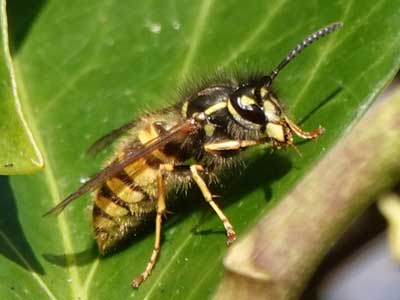
This is the most familiar of our wasps as it is abundant everywhere, even entering our homes. Although it has a tendency to sting it also feeds its larvae on a number of garden pests.
Hornet
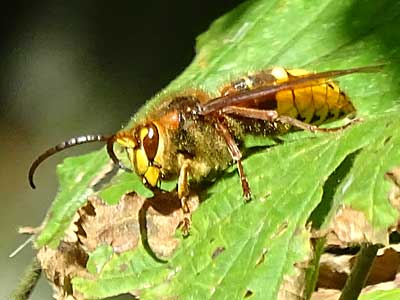
Although larger than other wasps, the hornet is less aggressive. It nests in a few hollow trees around the park.
Mason Wasps
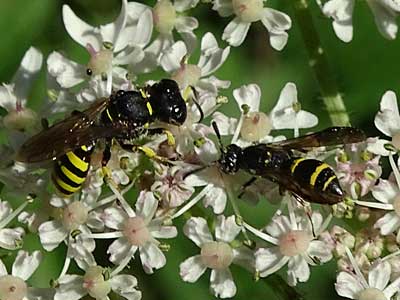
Most Mason Wasps are black with plain yellow banding and narrow waists. They are solitary wasps and rarely sting. The various species are difficult to tell apart.
Gasteruption jaculator
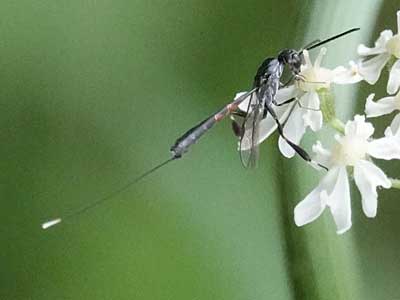
This parasitic wasp has a very long abdomen and the female (shown here) has an extremely long ovipositor which it uses to insert its eggs into the larvae of other solitary wasps or bees.
Beetles
Common Red Soldier Beetle
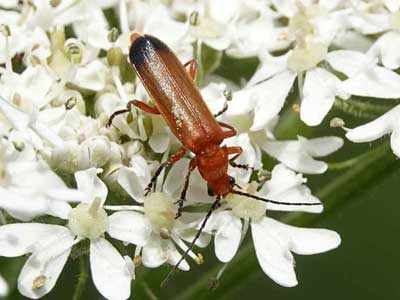
This is the most frequently seen of the Soldier beetles. Others have similar long rectangular shape but different colours.
Anthocomus Rufus
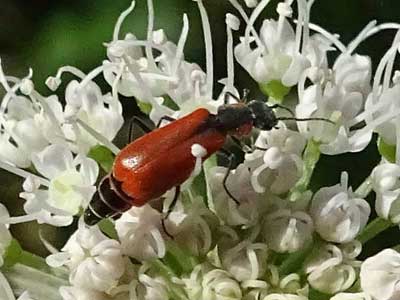
This distinctive beetle has a preference for the wet areas around reedbeds.
7-Spot Ladybird
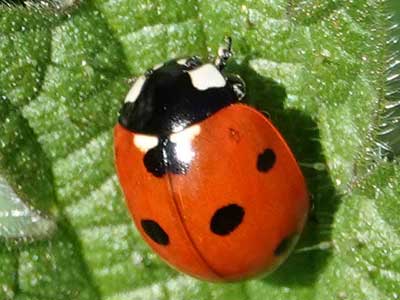
One of our best-known beetles, the 7-spot is one of several Ladybird species to be found in the park.
Thick-legged Flower Beetle
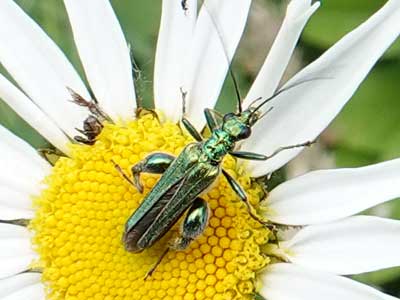
Also known as the False Oil Beetle, it is a great pollinator of wild flowers. Only the male has the characteristic swollen thighs.
Malachite Beetle
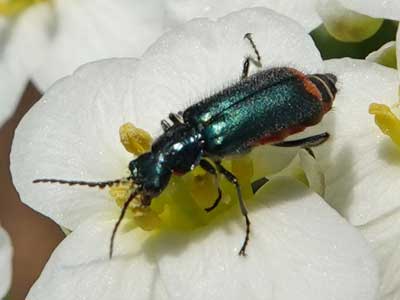
Recognised by its gem-stone green colour and the two red spots towards the rear of its wing cases.
Spotted Longhorn Beetle
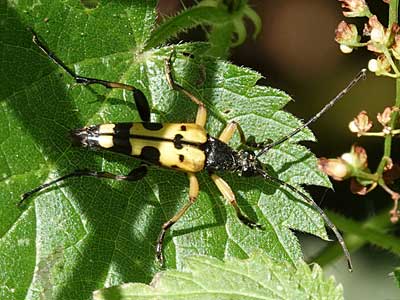
One of several species of longhorn beetles likely to be found in the valley, this one is easy to spot because of its bright colours.
Bugs
Common Green Capsid
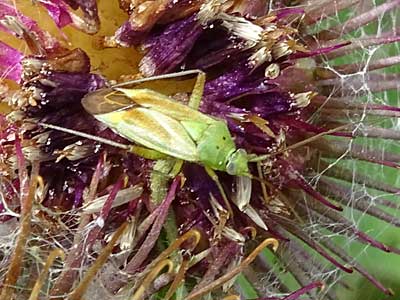
Often seen on thistles, this capsid is, as its name suggests, fairly common.
Capsid Grypocoris stysi
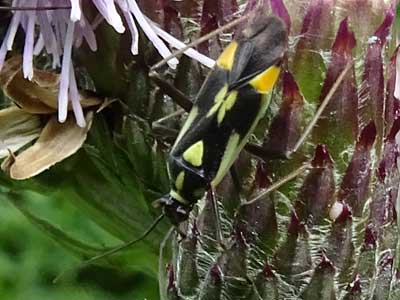
Another capsid, this one has far more distinctive markings.
Leaf Hopper

There are many different kinds of leafhopper, a family of jumping bugs.
Dock Bug
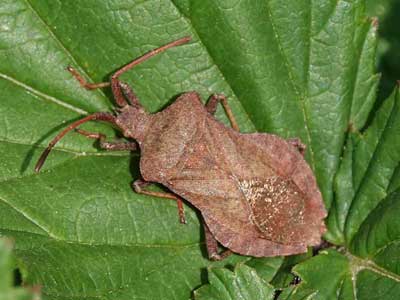
Very common in the valley as its favourite food is the Dock plant.
Sloe Bug
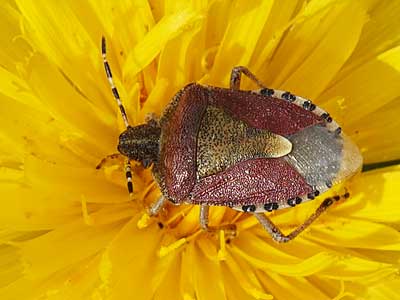
Another member of the shield bug family, all of which have a shield-like shape.
Green Shield Bug

A common shield-bug, which is bright green all over, although it darkens in the autumn.
Crickets and Grasshoppers
Common Green Grasshopper
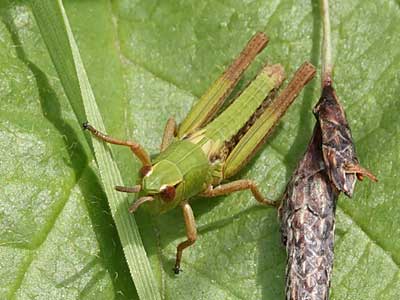
Several grasshoppers are quite variable in colour.
Field Grasshopper
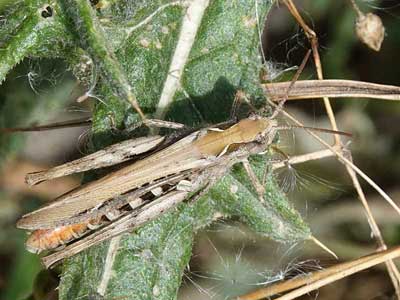
Usually brown, but green, grey and reddish forms exist.
Roesel's Bush Cricket
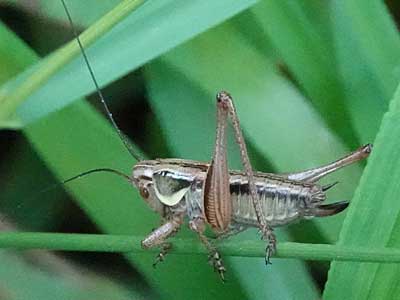
Fairly common in the valley, identified by the yellow border to its pronotum.
Speckled Bush Cricket
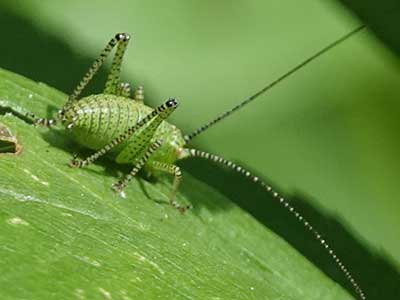
This bush cricket is instantly recognisable by its tiny black spots.
Dark Bush Cricket (nymph)
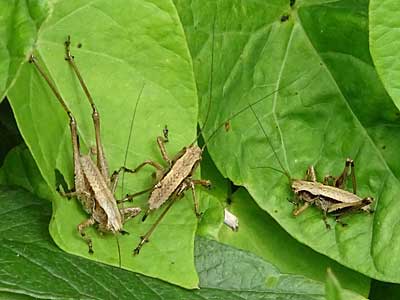
The adults are pale brown to almost black above and greenish yellow below
Conehead Cricket (nymph)
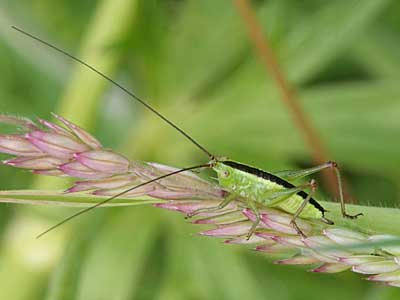
Either the Short-winged Conehead or the Long-winged Conehead which are much the same at the nymph stage.
Other insects
Alder Fly
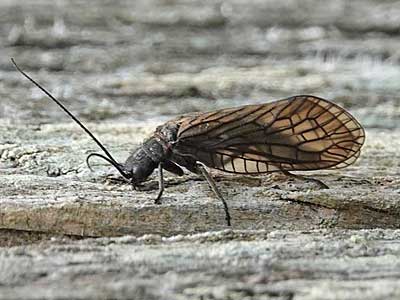
Alder flies are weak fliers and rarely move far from water where they breed.
Ichneumon Fly
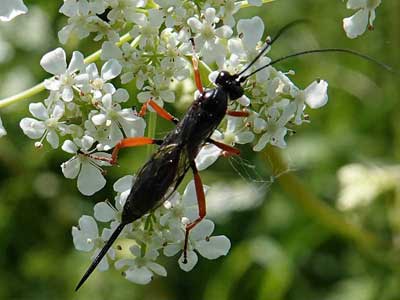
One of a number of Ichneumon flies, all of which are parasitoids and several are nocturnal.
Scorpion Fly
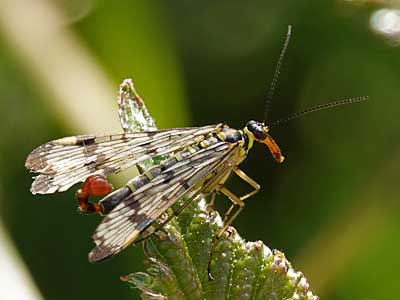
Despite its name the Scorpion Fly is harmless. Only the male’s tail curls like a scorpion’s.
More Information
The Amateur Entomologists’ Society has a very informative website about insects.
Insects of Britain and Northern Europe is an interesting Facebook group
More about Bees and Wasps (and ants) on the BWARS website and UK Bees, Wasps and Ants group on Facebook
British Bugs is a good on-line guide to the true bugs of the UK
Download a free Field Guide to common Bush Crickets and Grasshoppers
Photos on this page by Peter Hunnisett

