
Dragonflies
The Combe Valley Countryside Park is home to many dragonflies. They can be divided into two groups: the damselflies and the dragonflies. Damselflies are generally smaller and daintier, and when they land, they usually fold their wings back along their body. Dragonflies are larger, more robust and hold their wings at right angles to the body when at rest.
Dragons and damsels are predators, and their amazing eyesight and flying skills enable them to hunt other flying insects.
Damselflies
The photographs below show the damselflies most likely to be seen within the park.
Beautiful Demoiselle (m)

With their large colourful wings the Demoiselles resemble butterflies in flight
Beautiful Demoiselle (m)
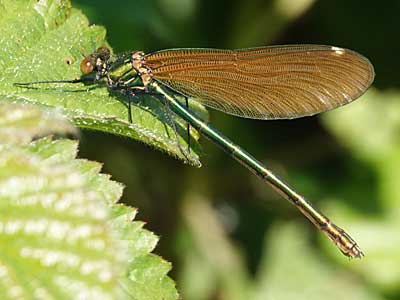
The female Beautiful Demoiselle has translucent brownish wings.
Banded Demoiselle (m)

The male Banded Demoiselle has clear wings with a dark band part way along each.
Banded Demoiselle (f)

The female Banded Demoiselle has translucent greenish wings.
Large Red Damselfly (m)
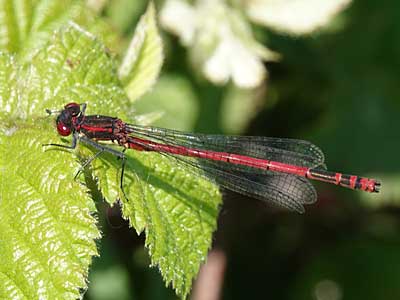
The only red damselfly you are likely to see in the Park. The female has more extensive black on her abdomen.
Azure Damselfly (m)
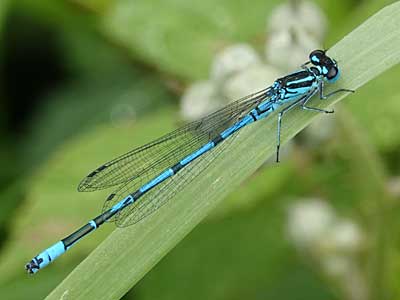
The Azure is the commonest ‘blue’ in the park.
Azure Damselfly (f)
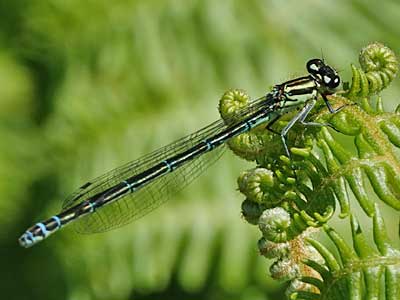
The female Azure is generally black on the top of the abdomen with only narrow blue stripes.
Common Blue Damselfly (m)
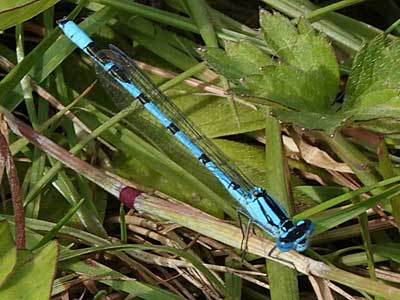
Despite its name this is not common in the Park and is very similar in appearance to the Azure
Blue-tailed Damselfly (m)
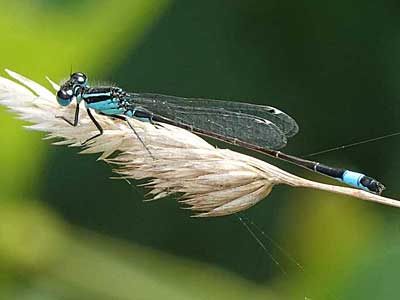
Fairly common in the Park and identified by its blue tail and two-tone wing spots. The female has several different colour forms.
Red-eyed Damselfly (m)
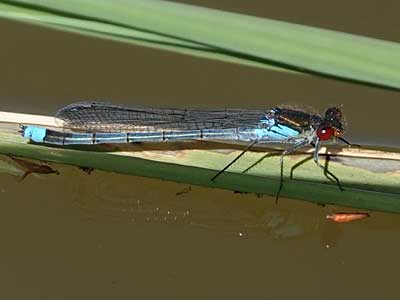
The male is easily confused with the Blue-tailed Damselfly but has distinctly red eyes and is less common. The female lacks the blue tail and has duller eyes.
Small Red-eyed Damselfly (m)
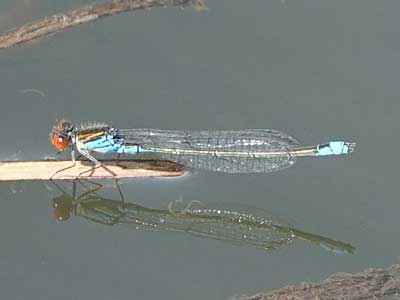
This recent colonist from Europe is now breeding in the Park. Smaller than the Red-eyed Damselfly and it appears later in the summer.
Willow Emerald Damselfly
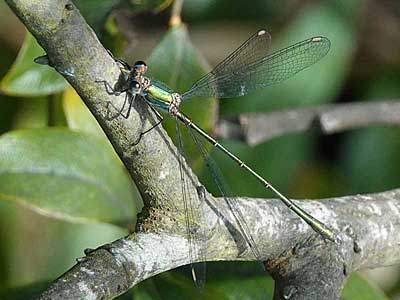
Only recently seen in the Park but they are extending their range along the South Coast. At least seven were present in 2020.
White Legged Damselfly
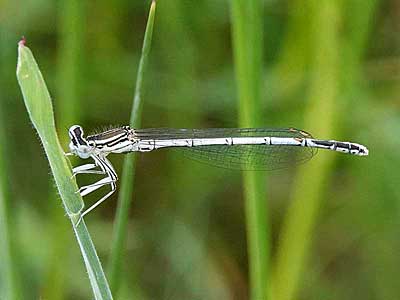
Not often seen in the park although a few breed here, but quite distinctive when it is spotted.
Most damselflies will be on the wing during May, June and July although some may be seen in April and some will still be around in September. Most of the photographs show the male damsel, which you are most likely to see. The females have different and often variable colouring and it can be difficult to tell some species apart.
Dragonflies
These photographs show some of the dragonflies most likely to be seen around the park.
Hairy Dragonfly (m)
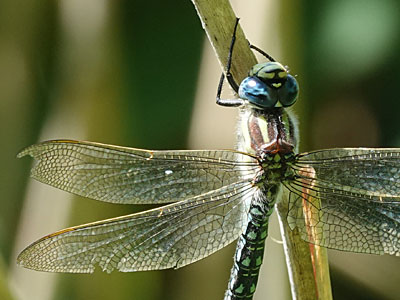
Often first of the dragonflies to appear, usually in May, this hawker is the only one that has a hairy thorax.
Migrant Hawker (m)

The resident population is added to by continental migrants. You are most likely to see them from August to October.
Migrant Hawker (f)
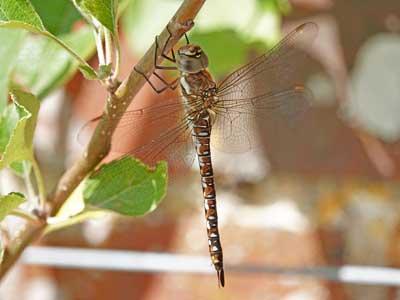
The female usually has brown and yellow markings instead of blue and yellow.
Southern Hawker (m)
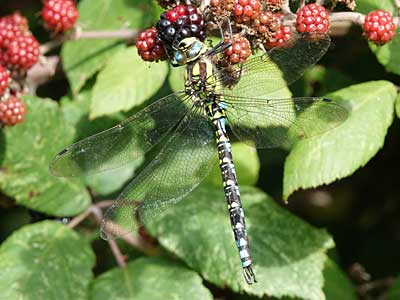
A colourful hawker with both green and blue markings. Mostly seen from July to September. Females are brown with green markings.
Brown Hawker
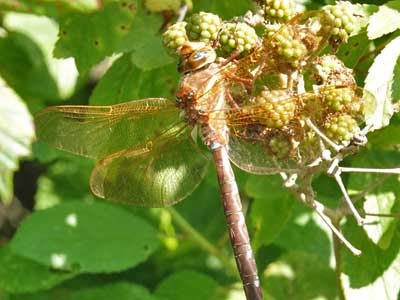
The only predominantly brown dragonfly, it has amber-tinted wings and is mostly seen during July and August. The sexes are similar.
Emperor Dragonfly (m)
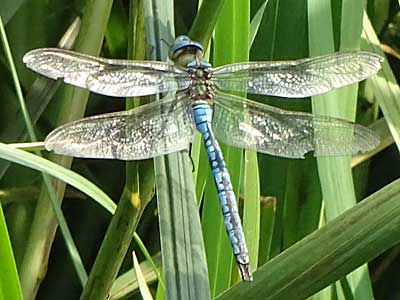
Our largest dragonfly, the male Emperor is distinctly blue in flight, and rarely seems to settle.
Emperor Dragonfly (f)
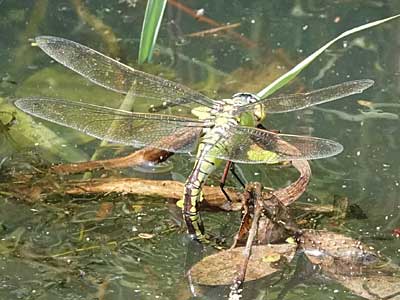
The female usually has green markings and is generally seen from June until August.
Four-spotted Chaser
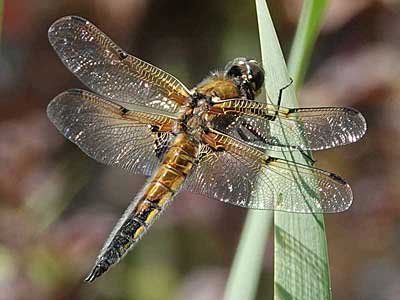
Common in the Park from late May and identified be the two dark spots on each wing and the black markings at the base of the hind wings.
Broad-bodied Chaser (m)
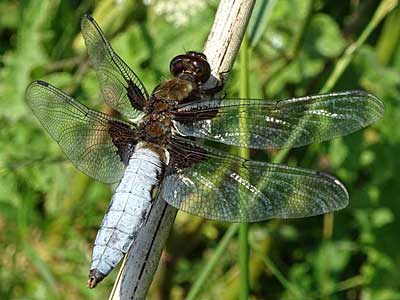
Another chaser that is common in the Park, it has the chaser markings at the base of the wings and a broad blue abdomen.
Broad-bodied Chaser (f)
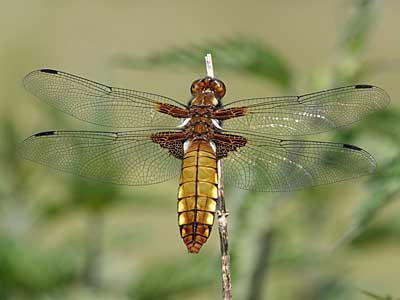
Similar to the male but with a yellow abdomen. Both sexes pose nicely for photographs!
Black-tailed Skimmer (m)

A narrower abdomen than the Broad-bodied Chaser and lacks the markings at the wing base. Fairly common around the Park.
Black-tailed Skimmer (f)
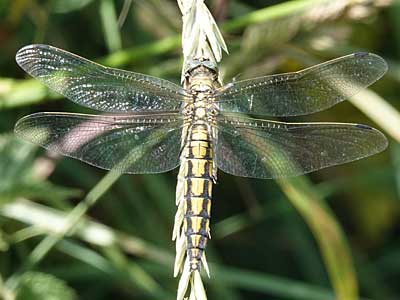
The female Black-tailed Skimmer has a black and yellow ladder pattern on her abdomen.
Common Darter (m)

Probably the most numerous dragonfly in the Park, Common Darters always have a light stripe on their black legs. Seen from July until at least October.
Common Darter (f)
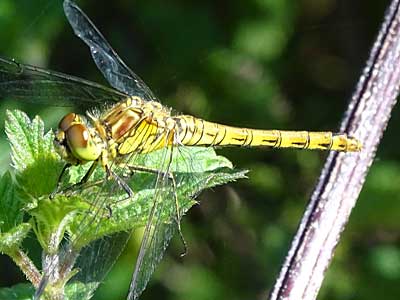
The female is mostly yellow-ochre becoming darker and sometimes reddish with age. The female Ruddy Darter is very similar.
Ruddy Darter (m)

Slightly smaller than the Common Darter, they have all black legs and a distinct 'waist' to their abdomen.
Dragonflies generally appear a little later than the damsels, some much later. The Migrant Hawker doesn’t appear in any numbers until August, but can still be seen in October, and sometimes later, along with the Common Darter.
Being strong fliers, dragonflies often stray some distance from the nearest water and can often be found on the edge of woodland or along hedges.
More Information
The British Dragonfly Society has an excellent website with identification guides and lots of information about ‘dragons’ and ‘damsels’.
UK Dragonflies and Damselflies is a very helpful Facebook group.
A useful field guide is “Britain’s Dragonflies” by Dave Smallshire and Andy Swash from the “Wild Guides” series.

