

Coastal Birds in Winter
Now that winter is approaching there are different birds to be seen along the coast.
 OystercatcherAlthough many of the birds can be seen all year, some of them are far more common during the winter months. All the birds shown here were photographed near Little Galley Hill in December.
Oystercatchers are easy to identify by their black and white plumage and their long red bill. Almost half of European Oystercatchers over-winter in the UK, where they congregate along rocky shores. They feed on bivalves like mussels, which are plentiful along our shore.
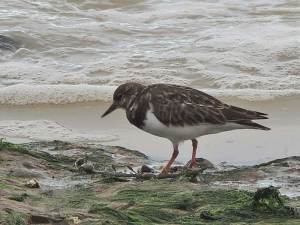 TurnstoneTurnstones are fairly common along our stretch of coastline, although they don’t breed here; their numbers increase in the winter. Smaller than Oystercatchers, they are the only other common wader we regularly see, and often congregate on seafront lawns such as outside the De La Warr pavilion. The birds that spend the winter here have come from Canada and Greenland and will leave again in early summer. A European population passes through in the spring and summer. Turnstones can often be seen flipping quite large stones over in their search for food.
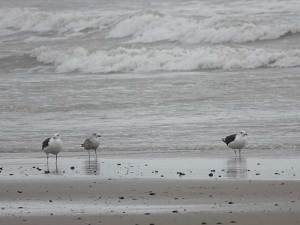 Great Black-backed GullHerring Gulls and Black-headed Gulls are common throughout the year, but a less common gull that is easy to spot along our shores in the winter is the Great Black-backed Gull. Larger than a Herring Gull, it has a distinctive black back and pale pink legs. They are very aggressive towards other gulls and will happily steal their food. They are omnivorous, feeding on shellfish, birds and carrion. You may also see the Lesser Black-backed Gull, a resident which is slightly smaller and has a greyer back and yellow legs.
Many other seabirds fly along the coast in winter but are looking for different habitats, so they rarely land near our beaches.

